
Six steps to mastery
Every word comes back just before you’d forget it.
Learn new words — nothing to get wrong
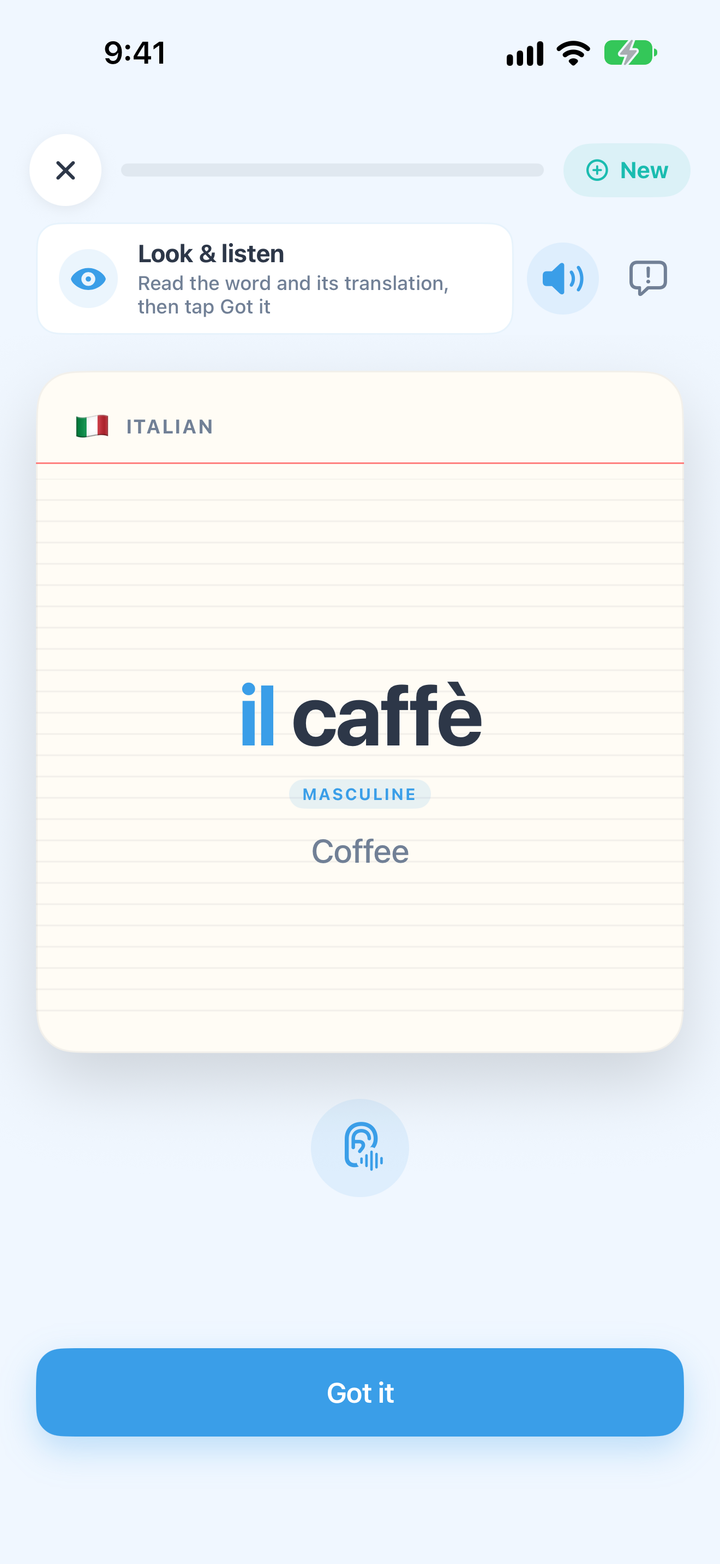
Learn new words introduces vocabulary: you see the word, its meaning and hear how it sounds. That's all. Nothing to answer, nothing to get wrong. You walk through a topic one word at a time, and the app remembers where you stopped — coming back picks up at the next new word. Once you've been through a topic, it moves you on to the next one, or you pick any topic yourself.
Review words — tested on what you've met
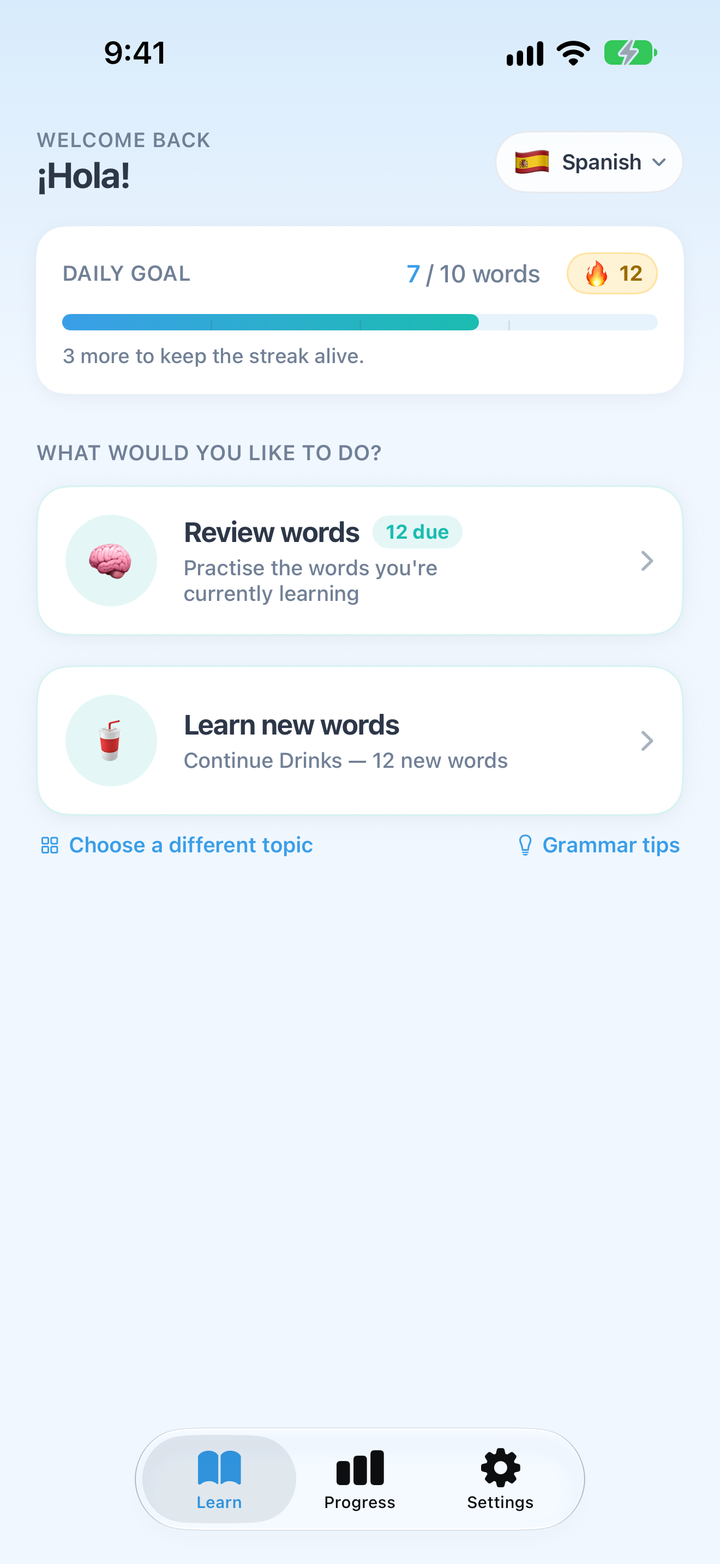
Review words is where you're actually tested, and only on words you've already met. A word you haven't been shown never appears here. Whichever of the two matters more today is offered first on the home screen.
The six boxes
A word starts at the bottom. Remember it and it moves up a box and comes back later — the next day, then after three days, a week, two weeks. Forget it and it drops back a box and returns sooner.
- —Learnmeet the word
- 1Read itnow
- 2Hear it1 day
- 3 · 4 · 5Recall it3 · 7 · 14 days
- 6Mastered✓
A wrong answer drops the word back one box.
| Box | Comes back | What you do |
|---|---|---|
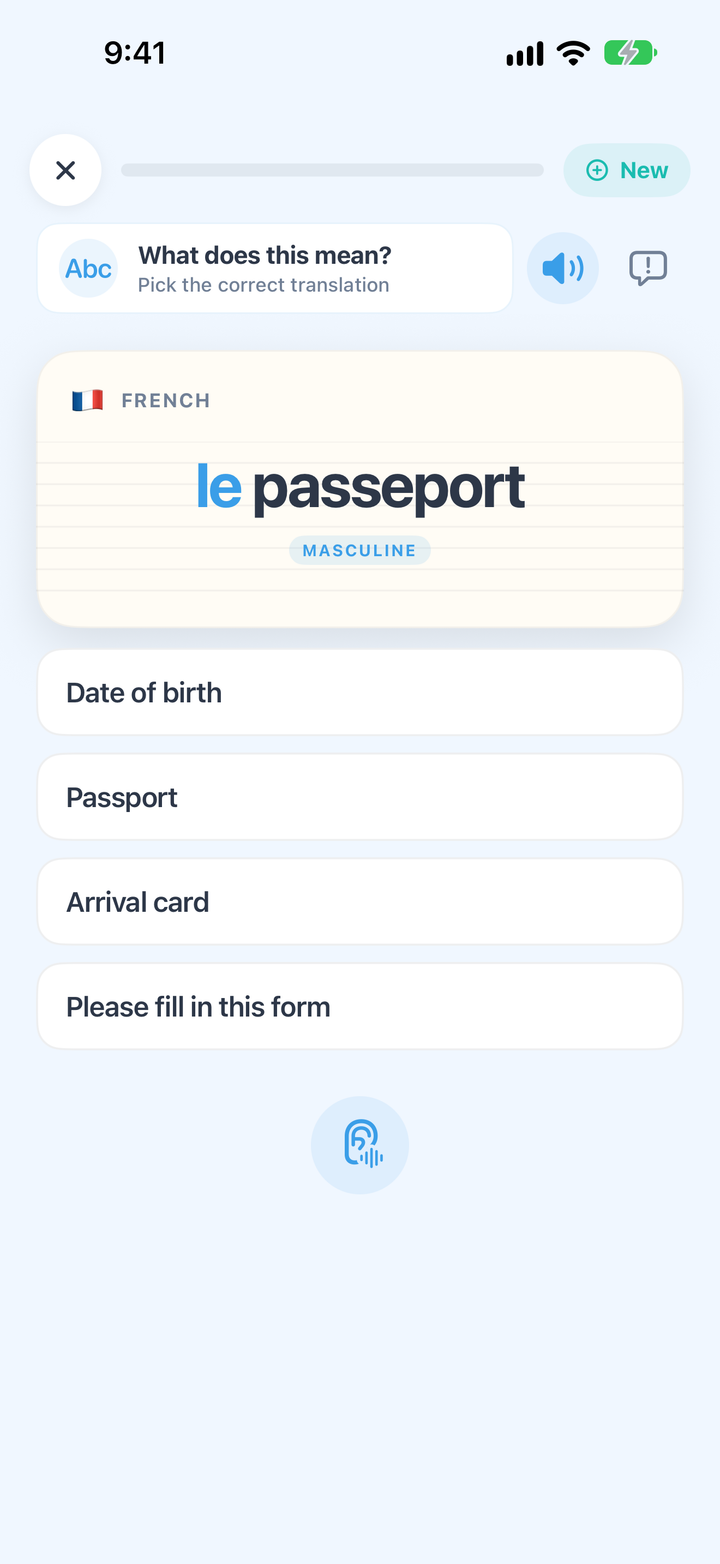
| 1 | right away | Read it — the word is shown; pick its meaning from four options |
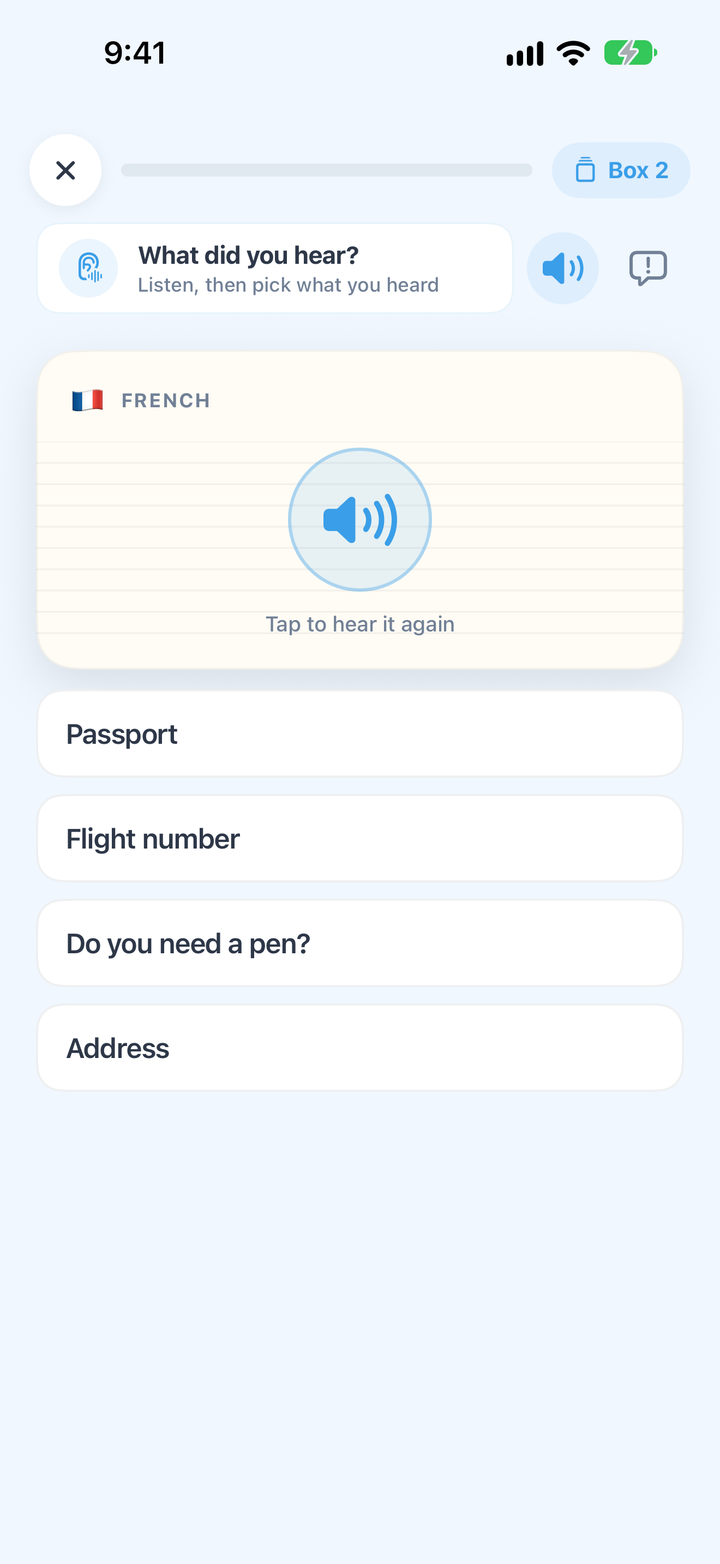
| 2 | after 1 day | Hear it — the same question, sound only; the text appears after you answer |
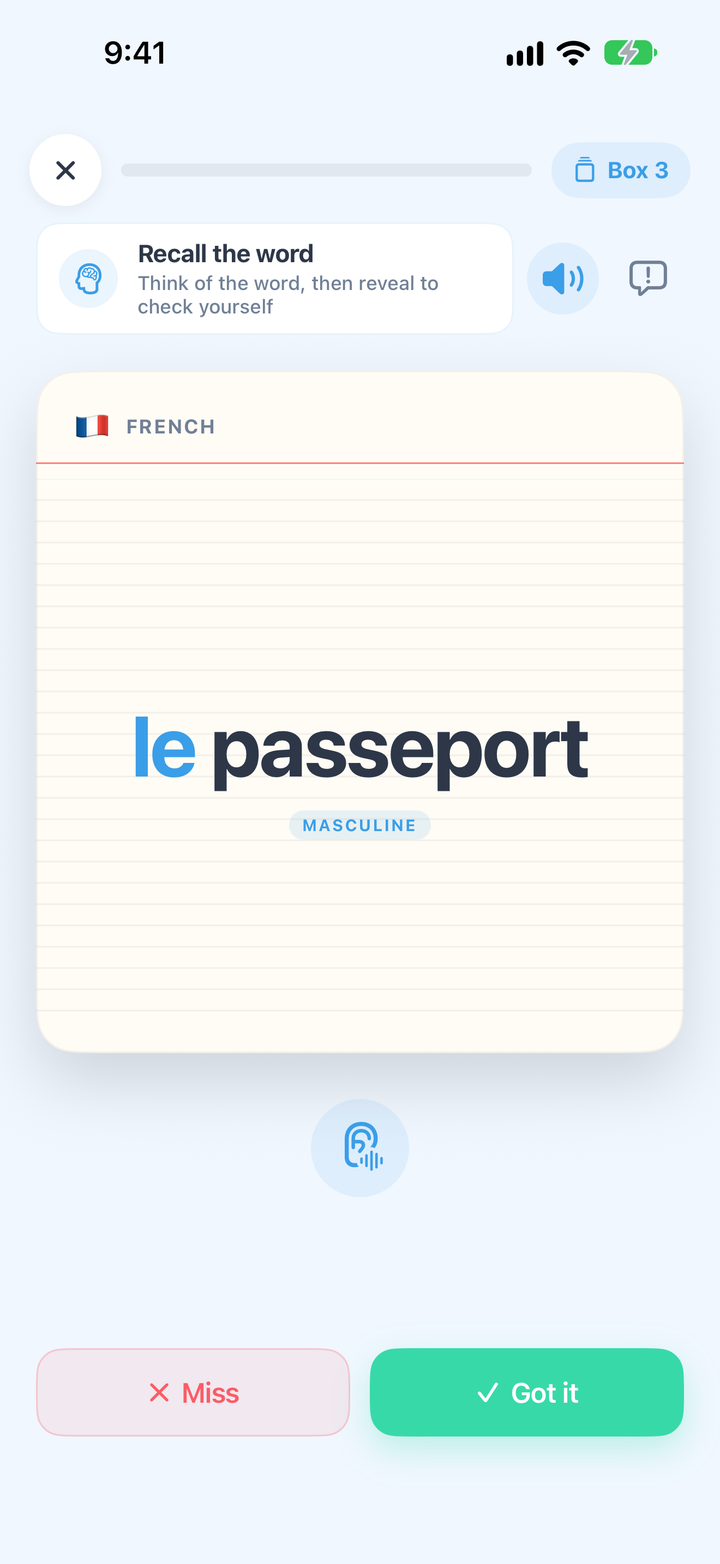
| 3 | after 3 days | Recall it — you see the meaning and produce the word from memory |
| 4 | after 7 days | Recall it |
| 5 | after 14 days | Recall it |
| 6 | — | Mastered. Shown again only if left untouched for six months. |
Why the gap grows
Being asked again just before you'd have forgotten is what makes a word stick. That's why 15 minutes a day beats 2 hours once a week — and why the app, not you, decides when a word comes back.
Why read → hear → recall
Recognising a word is easier than recalling it, and reading is easier than listening — a sound is gone the moment it's played. So each box makes it a little harder instead of throwing you in at the deep end: first the written word with four options, then only its sound with the options, then no help at all. By the top boxes, you produce the word unaided, which is what the job needs.
Nouns come with their gender
You learn das Wasser, not Wasser, because the bare word still leaves you unable to build a correct sentence. Articles are colour-coded throughout the app — masculine, feminine, neuter — so the pattern sinks in without studying grammar. Where an article hides the gender (French and Italian l’) or a plural doesn't show it, there's no colour, rather than a misleading one.
- la mantaBlanket
- il passaportoPassport
- das WasserWater
Grammar only where the cabin needs it
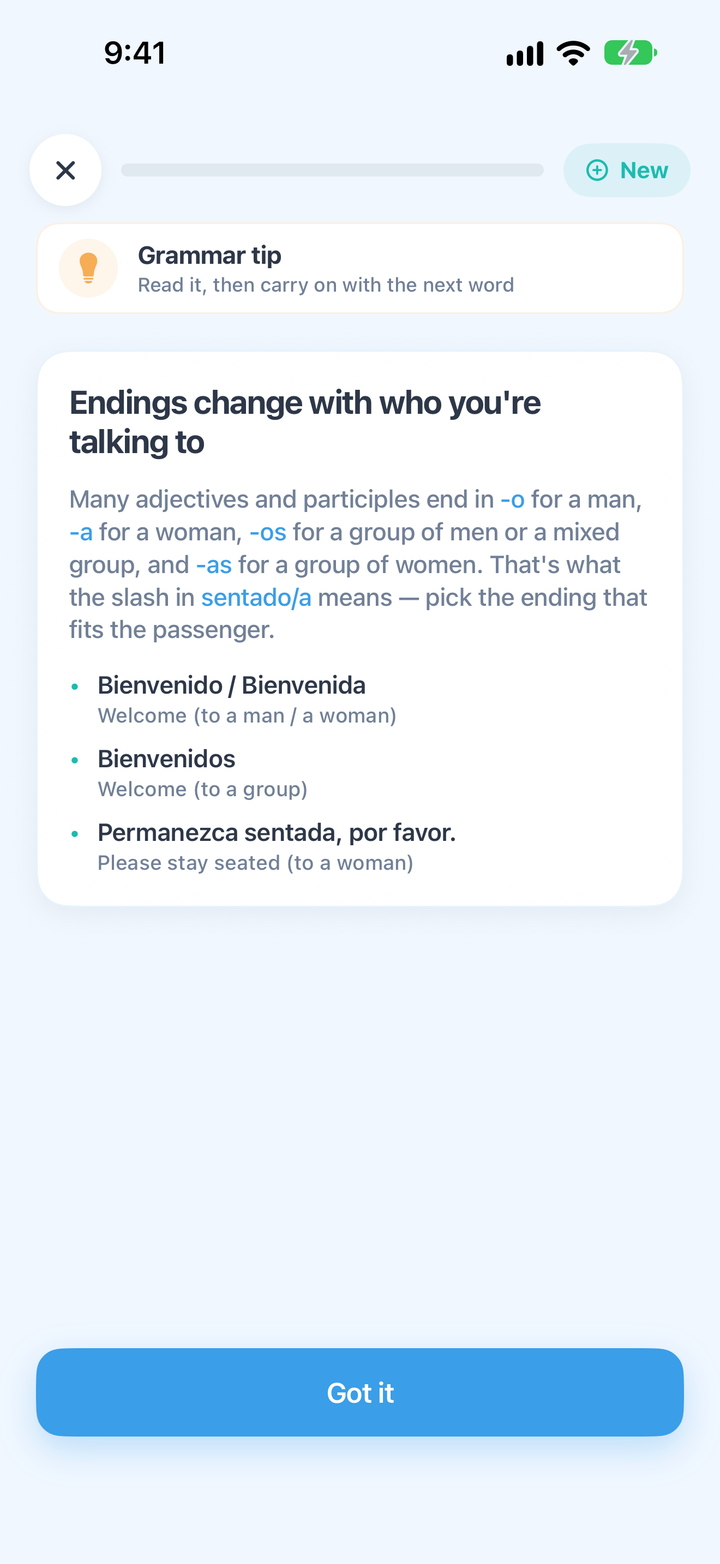
No conjugation tables. Verbs are learned inside the phrases you actually say. What you do get, as short hints while learning, is the grammar that changes a phrase you already use: articles and gender, plurals, the polite "you", and endings that change with who you're talking to — Bienvenido / Bienvenida / Bienvenidos.
Fits around a roster
- A session is a few minutes. Stop any time; a half-finished topic resumes where you were.
- Daily goal of 5, 10 or 20 words, with a reminder at a time that suits you.
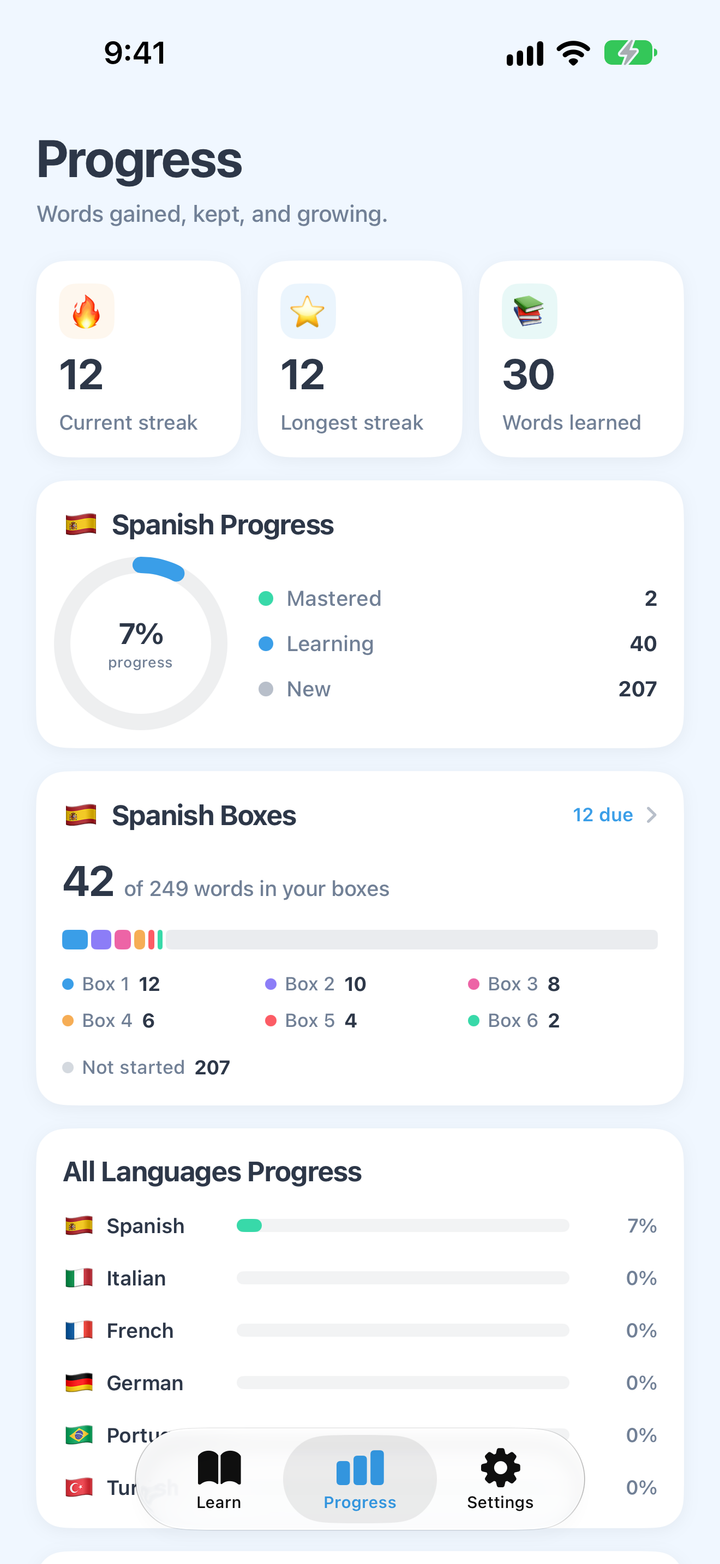
- Streak of consecutive days practised, which survives until you miss a full day.
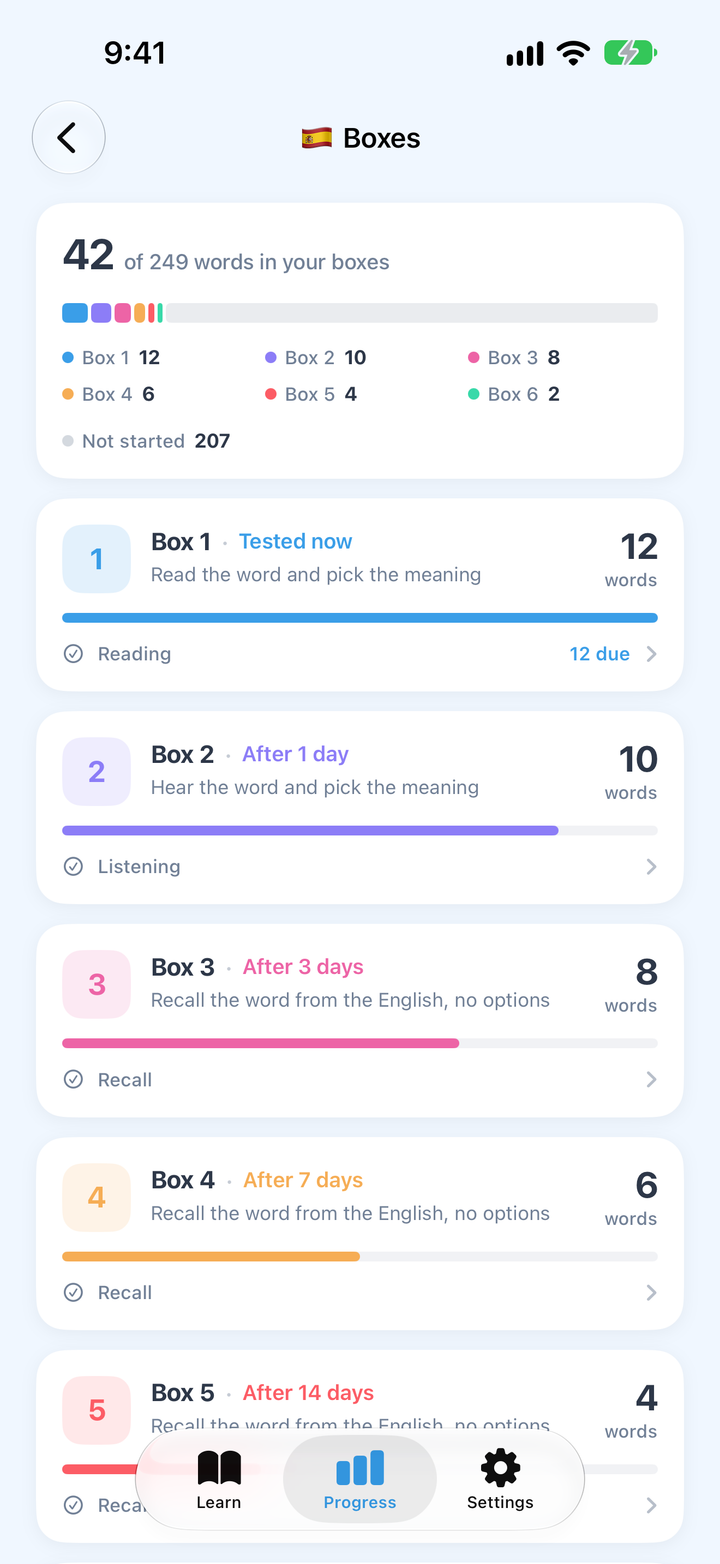
- Boxes shows exactly where every word sits, searchable — your progress is never a mystery number. Progress adds accuracy, study time, a per-language breakdown and badges.
- Several languages at once, each with its own separate progress.
- Your native language for the meanings, if English isn't the one you think in.
Coming soon to the App Store